
Phosphorus is an essential mineral for the body, as it contributes to the proper function of bones and teeth. However, in patients with kidney disease, its levels may increase because the kidneys are unable to eliminate it effectively.
In our diet, phosphorus exists in two main forms: natural phosphorus (found in foods such as meat, dairy products, and legumes) and phosphorus from additives, which is commonly found in processed foods and is more easily absorbed by the body.
Excessive phosphorus intake can place additional strain on the kidneys and accelerate the progression of kidney disease. It also increases the risk of cardiovascular disease and heart damage. When phosphorus levels are lower, this is associated with better blood circulation, more energy, and may help a kidney transplant last longer.
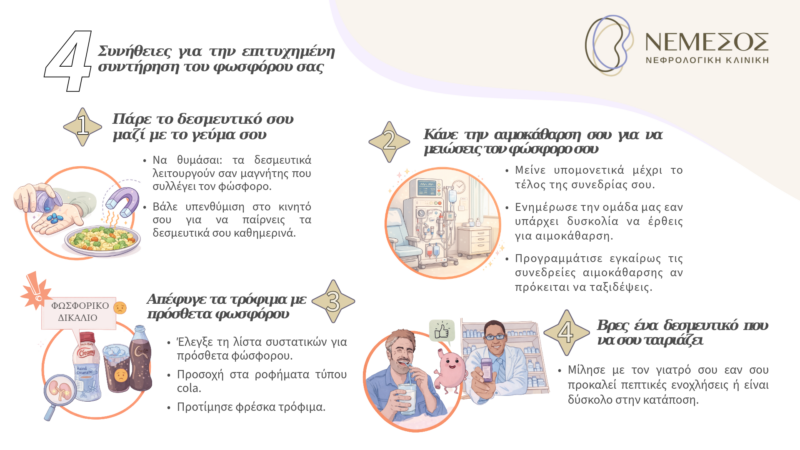
For this reason, it is important to pay attention to food choices, especially by avoiding products that contain added phosphorus, such as processed meats, cola-type soft drinks, ready-made meals, and processed foods in general.
At the same time, proper phosphorus management is based on simple but essential steps, such as taking your phosphate binder with meals to reduce absorption from the intestine, being consistent with dialysis sessions that help remove excess phosphorus from the body, avoiding foods with added phosphorus that are more easily absorbed, and, following your doctor’s advice, choosing the binder that suits you so you can take it correctly and regularly.
Consistency with these habits plays a key role in protecting health and improving quality of life.